AI coding agents can now run for hours. A single Claude Code session can write hundreds of files, refactor entire modules, wire up integrations, and push a working feature. The speed is real and the capability is genuine.
But speed without supervision is a compounding liability. Every session that runs without a structural check is a session where the AI might have made an architectural decision that contradicts a previous one, added a dependency that crosses a community boundary, or inflated a keystone node’s blast radius without anyone noticing.
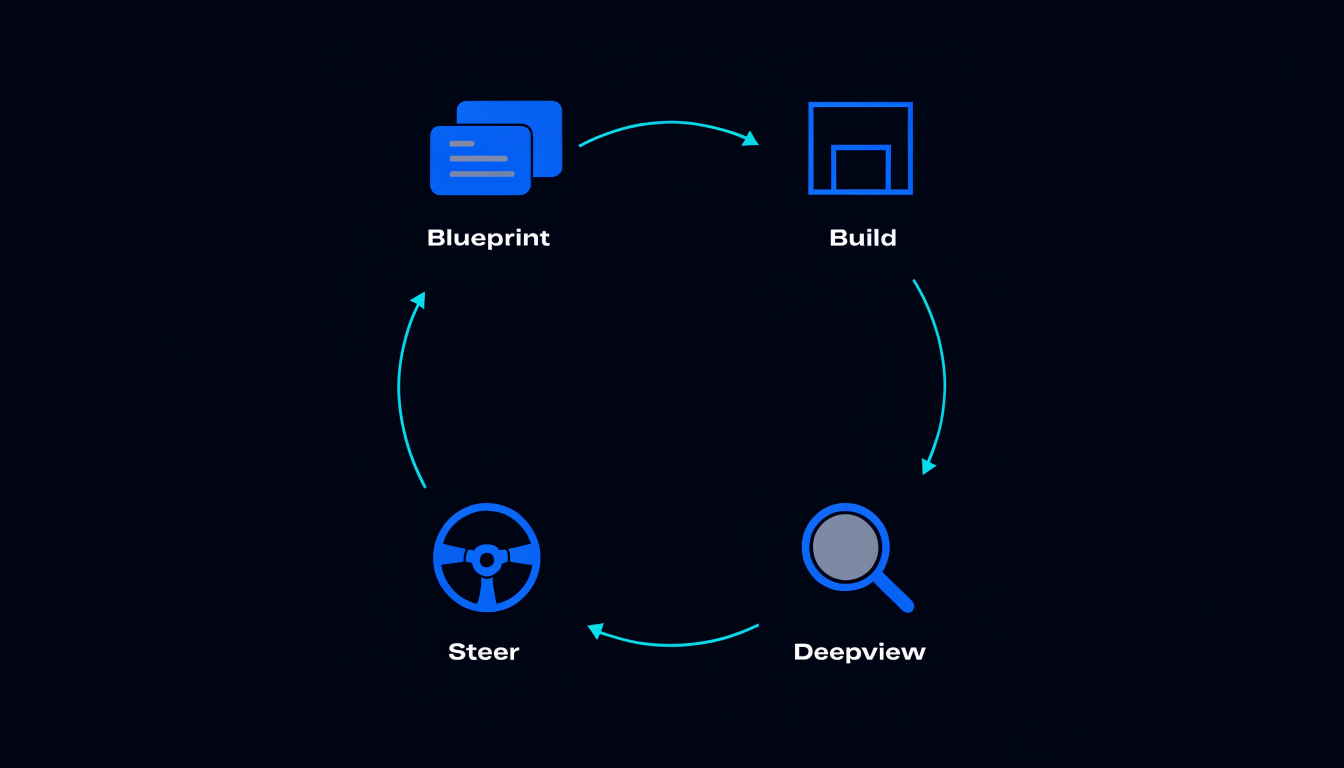
The agent review loop is the workflow for staying in command of a build that moves faster than you can manually review.
Phase 1: Plan on the Blueprint
Before the build session starts, the blueprint is the specification. What exists on the canvas is what the AI is authorised to build. Components not on the canvas should not be speculatively added. Relationships not drawn should not be assumed.
A well-prepared blueprint session before an AI coding session is worth more than a thorough review after it. The AI building from a clear blueprint makes fewer architectural surprises.
If you’re continuing an existing build: update the blueprint first. The canvas should reflect the intended next state before the AI touches the code. This discipline, "draw what you intend, then build it", is the blueprint-first version of plan-before-you-code.
Phase 2: Build with AI
The AI session runs. The agent writes code, makes decisions, wires up components. You can supervise in real-time or let it run.
The key thing to do during a long-running session: watch the live edit alert. When the agent saves a file with a high blast-radius impact, the alert fires. You can intervene immediately or note it for the post-session review.
Phase 3: Review in Deepview
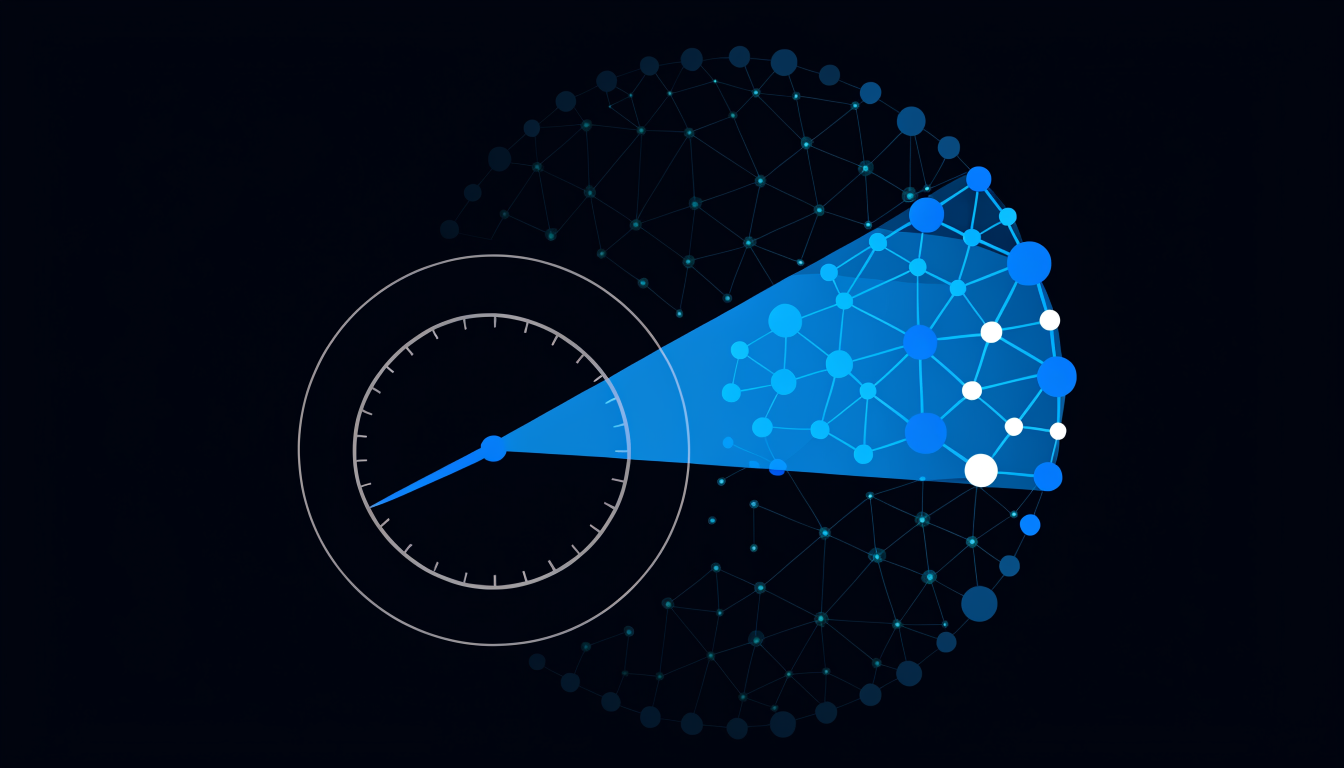
After each significant AI session, open Deepview. Run a drift comparison against the pre-session brain (or the last-good-state brain).
The drift comparison tells you:
- Which communities changed membership (did any files migrate to unexpected clusters?)
- Which files gained spikescore (did any file become significantly more central than it was?)
- Which new edges appeared (did the AI add dependencies that cross community boundaries?)
A structural review in Deepview takes 5, 10 minutes. It surfaces the architectural decisions the AI made implicitly, not in any comment or commit message, but in the graph topology.
Phase 4: Steer with Memory Tree
After the Deepview review, the steering actions become clear:
If the AI made a decision you want to preserve: add it to the Memory Tree. "The AI added a caching layer between the API and the database, preserve this pattern."
If the AI made a decision you want to reverse: leave a comment on the relevant memory or add a new memory with the constraint. "No direct database calls from the API layer, route through the repository." The AI will pick this up in the next session.
If the AI crossed a community boundary you want to prevent in future: add a boundary memory. "The worker service should not import from the auth module, use the token validation endpoint."
The loop cadence
For active AI-assisted development, a daily loop cadence works well:
- Morning: update the blueprint with the day’s intent
- Build session (AI runs)
- End of day: 10-minute Deepview review + Memory Tree annotation
For longer autonomous sessions (overnight runs, weekend builds), a per-feature-completion loop: check after each significant feature is complete, not just at the end of the day.
What the loop is not
The loop is not a replacement for code review. It is a structural complement to code review. The loop catches architectural decisions; code review catches implementation decisions. Both are necessary.
The loop is also not a constraint on the AI’s autonomy. A well-annotated Memory Tree and a clear blueprint give the AI more autonomy, not less, because the agent has the context to make good decisions independently, without requiring constant steering inputs.
Command is not control. It is knowing what was built, what the architecture looks like now, and what direction the next session should take. The agent review loop is how you maintain command.